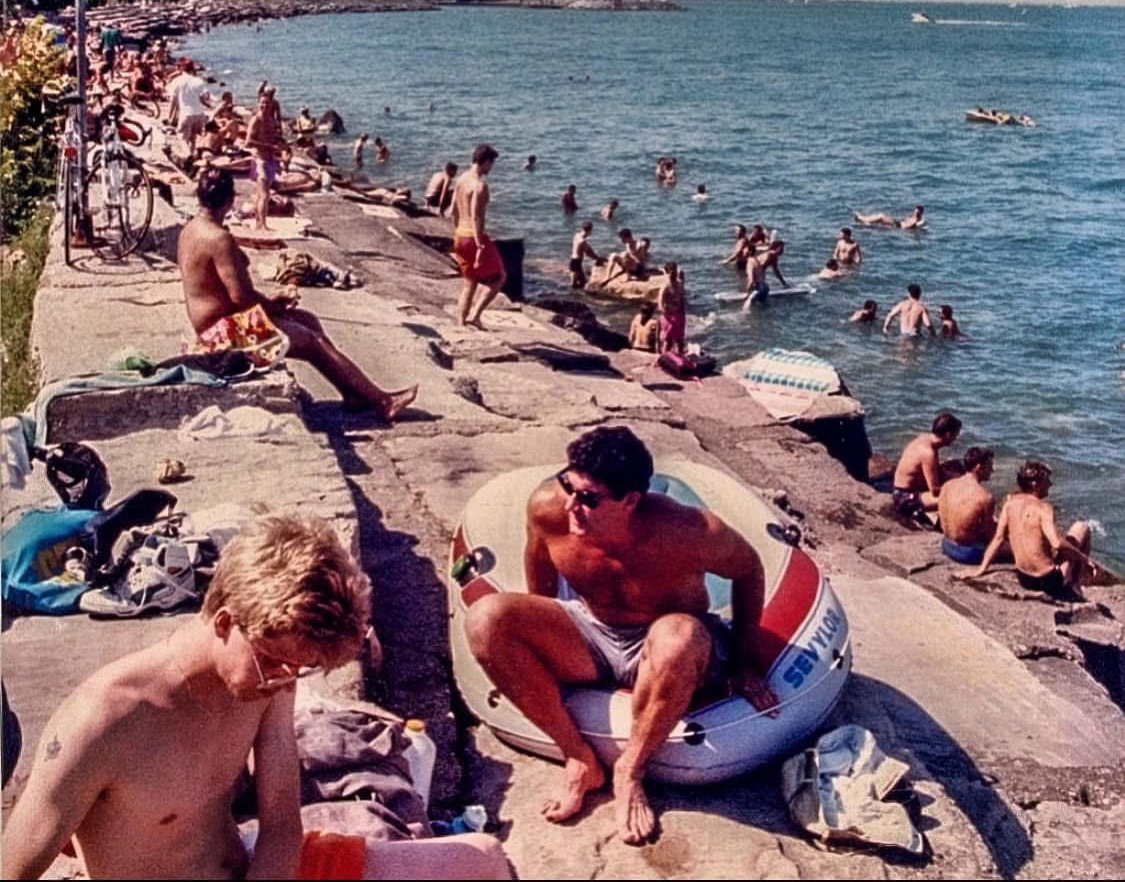
The first time I happened upon the Belmont Rocks, I thought I had found a slice of heaven … with a very loose dress code.
There was dance music, pot smoke, Frisbee, and Speedos aplenty. The mood was welcoming, cruisy, and joyful.
That summer, I returned at every opportunity. At the Rocks, I discovered the warmth and power of community. My experience was not uncommon.
In this article
Queer life at the Belmont Rocks
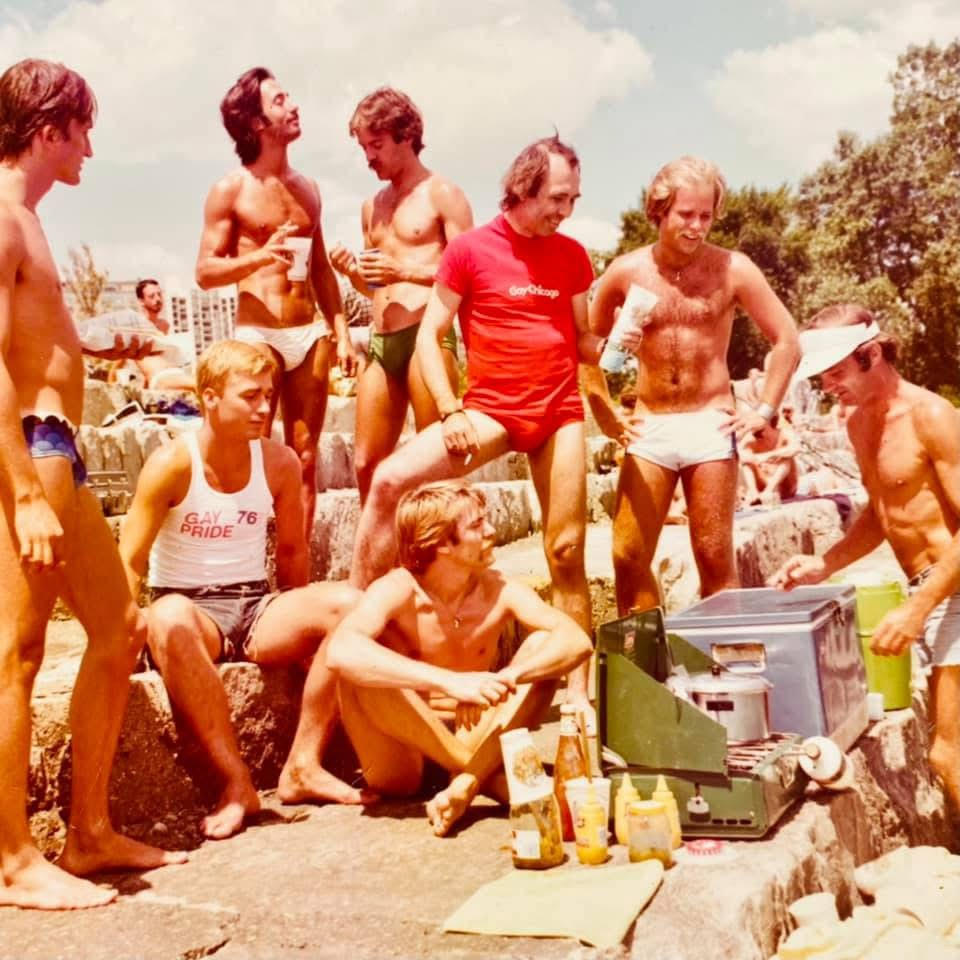
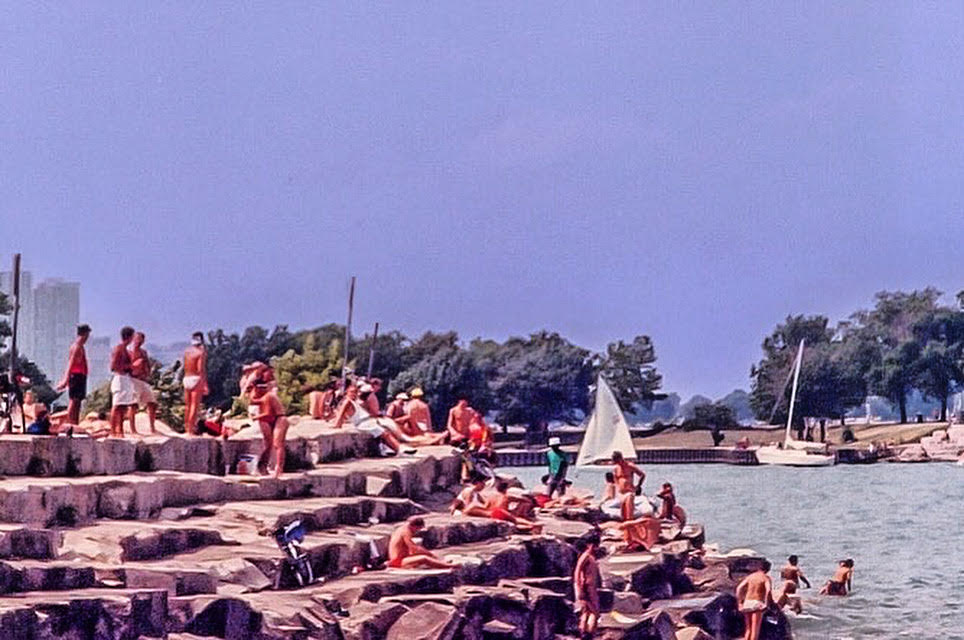
The Belmont Rocks was a world unto itself — a gathering spot for cookouts, hookups, unions, memorials, LGBT softball and volleyball, dance parties, Radical Faerie time, sobriety fellowship as an alternative to the bar scene, and a safe place for queer youth.
For over two decades, the Belmont Rocks was the site of a Pride Parade after-party for those who felt excluded by the usual post-Pride festivities, primarily People of Color.
Everyone did their own thing at the Rocks, but they did it together.
Socializing, people-watching, and tanning were the primary pastimes there, but folks often came here to meditate, ponder, and journal.
Many found creative inspiration at the Rocks. Some went there to pen poems or to sketch. The Belmont Rocks was a place for expression and finding a voice. Queer art and carvings of every sort and skill level covered many of the limestone slabs, turning the Rocks into an open-air gallery that was in a constant state of change. The Rocks were our tablets, our altars, and our backrooms — a platform and a stage for a big part of Chicago’s unfolding queer story.
The history of the Belmont Rocks
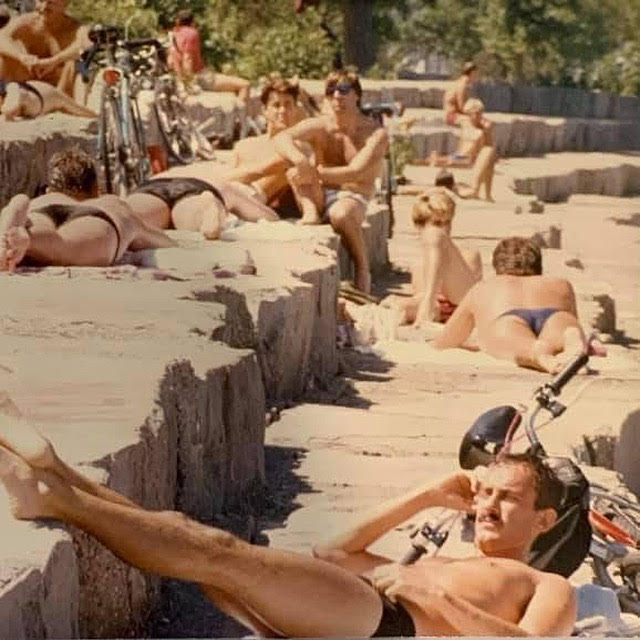
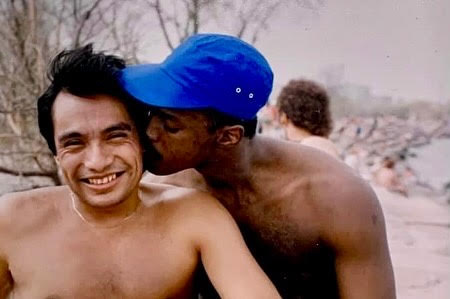
The Belmont Rocks had been a gathering spot for Chicago’s gay community since the late 1950s.
LGBT pioneers claimed the stretch of undesirable lakefront where tiered limestone slabs, in great disrepair, led down to the water.
The Belmont Rocks extended along the lakefront from Belmont Harbor to the Lincoln Park Gun Club, north of Diversey Harbor. The lawn east of the bike path along this strip was also Belmont Rocks territory.
By the early 1970s, that green had become so popular that on sunny days the grassy area was a patchwork of blankets and beach towels.
A full decade before the 1969 Stonewall rebellion sparked the modern gay rights movement, a quiet revolution was happening in Chicago at the Belmont Rocks.
Gay people were coming together. More importantly, coming together to claim space.
In doing so, LGBT pioneers were declaring our right to be here, our right to exist, and our right to gather outside in the sunshine at a time when gay bars still had blackened windows and patrons sometimes entered through the alley.
At the Rocks, we felt safety among one another and with it a sense of camaraderie. Gathering outdoors fostered trust and bolstered community empowerment. Coming together, gay people often discovered they had more in common with this ‘family’ than with blood relations.
Those leading closeted lives rarely had the freedom to be themselves. As a result, places like the Belmont Rocks or a gay bar attained an exalted importance. But whereas the bars tended to attract this crowd or that crowd, the Rocks attracted almost everyone.
Honoring the legacy of the Belmont Rocks
The party at the Belmont Rocks ended in the early 2000s with a decree from the Army Corps of Engineers. The area was slated for demolition as part of a shoreline revetment project to prevent erosion.
As a result, the Rocks were bulldozed in 2003. By then, much of Chicago’s gay community had already gravitated north to Hollywood Beach.
No grand event happened at the Belmont Rocks, but countless life-changing experiences did. The story of the Belmont Rocks is a mosaic of experiences that combine to tell the story of our community—a story of great courage and tenacity, persevering through invisibility, indifference, hostility, and AIDS.
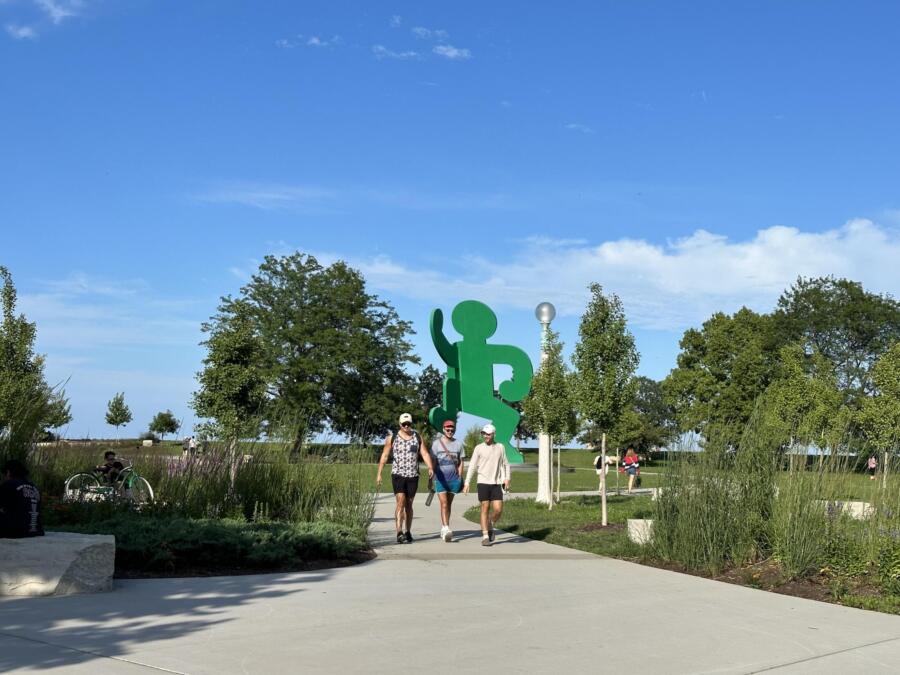
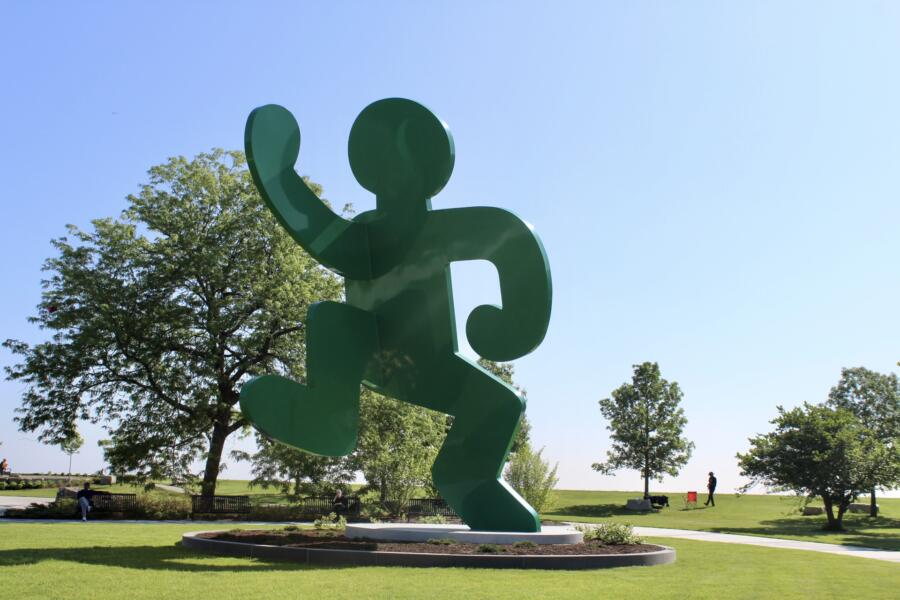
Almost twenty years after the Belmont Rocks were bulldozed, it was announced that the new AIDS Garden Chicago would be constructed on 2.5 acres of former Belmont Rocks territory.
The garden officially opened on June 2, 2022. Today, the public space honors those lost to AIDS, those still living with HIV, and all those whose lives have been impacted by the virus.
The AIDS Garden is a collaborative effort of the Chicago Park District and the Chicago Parks Foundation and was spearheaded by State Representative Greg Harris and Alderman Tom Tunney.
The garden is home to “Self-Portrait,” a 30-foot Keith Haring statue and the first public monument in Chicago to honor those impacted by AIDS.
Once more, this place that was integral to the lives of so many queer Chicagoans is a place for gathering. Once more, the area is a place for people to come together with a sense of safety and belonging — the very things that many, like myself, found at the Belmont Rocks.
Explore more: Dive into LGBTQ+ neighborhoods, events, and culture in Chicago.