For a century, the illustrious history of Route 66 has captured the American imagination. More than a highway, the so-called “Mother Road” is an open‑road promise stretching from the Midwest to the Pacific — and it all begins in Chicago.
Route 66 history
Chicago has been the official starting point of Route 66 since the iconic byway was commissioned in 1926. Over the years, the road has become a bucket-list experience for road trippers, history lovers, and anyone looking to immerse themselves in classic Americana.
In 2026, Chicago is honoring the 100th anniversary of Route 66 with a year-long centennial celebration honoring the past, present, and future of the Mother Road. Learn more about this historic route, including how it got its start, its evolution over the years, and how you can experience it for yourself.
The history of Route 66 in Chicago
- Chicago has been the official starting point of Route 66 since the highway was commissioned in 1926.
- The 2,448-mile highway ran from Chicago to Los Angeles, California and is one of the country’s most iconic road trips.
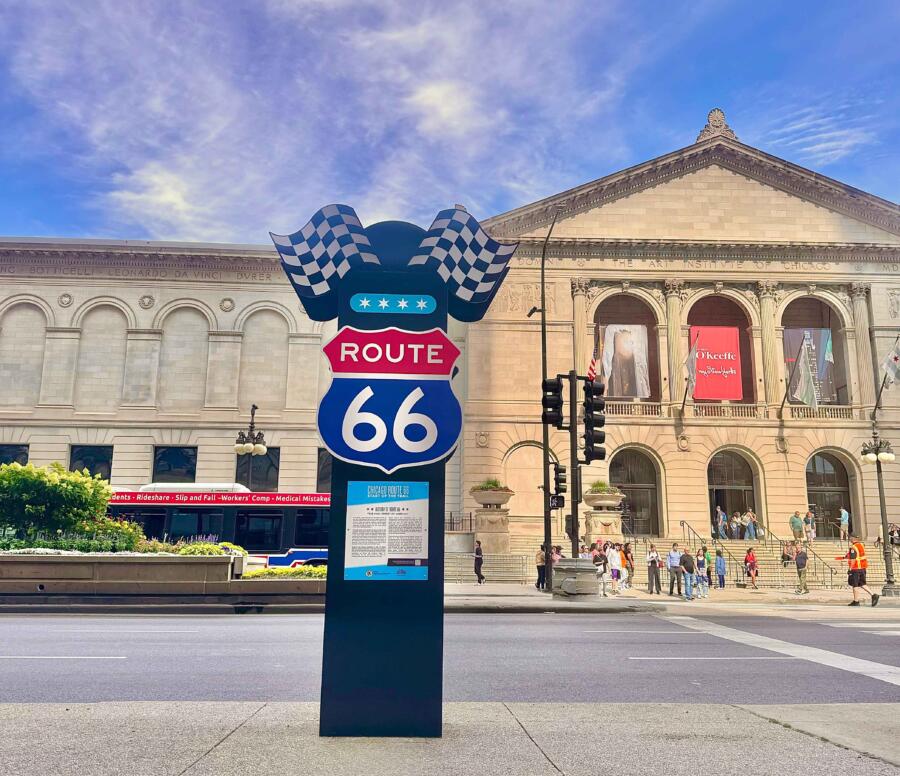
- The original route began at Jackson Boulevard and Michigan Avenue, but the city recently declared lakefront Navy Pier the centennial starting point.
- Chicago is celebrating the 100th anniversary of Route 66 with a year-long celebration in 2026.
How Route 66 came to be
Route 66 emerged at a moment in U.S. history when the country was shifting from railroads to automobiles as its primary mode of travel.
Cyrus Avery, a member of the Federal Highway System planning committee in the 1920s, argued that a Chicago‑to‑Los Angeles route would stimulate commerce and support the nation’s growing automobile culture.
He pushed for a diagonal roadway that would connect the Midwest to the Pacific, stitching together small-town main streets and existing local roads into a single, continuous path.
The result was a 2,448‑mile ribbon of asphalt running from Chicago to Los Angeles. Today, Avery is widely regarded as the “Father of Route 66.”
Why Route 66 begins in Chicago
When Route 66 was commissioned in 1926, Chicago was the natural choice for its eastern terminus. At the time, the city was an essential crossroads for railroads, highways, and waterways. Travelers headed west already funneled through Chicago, making it the ideal gateway to the Great Plains and beyond.
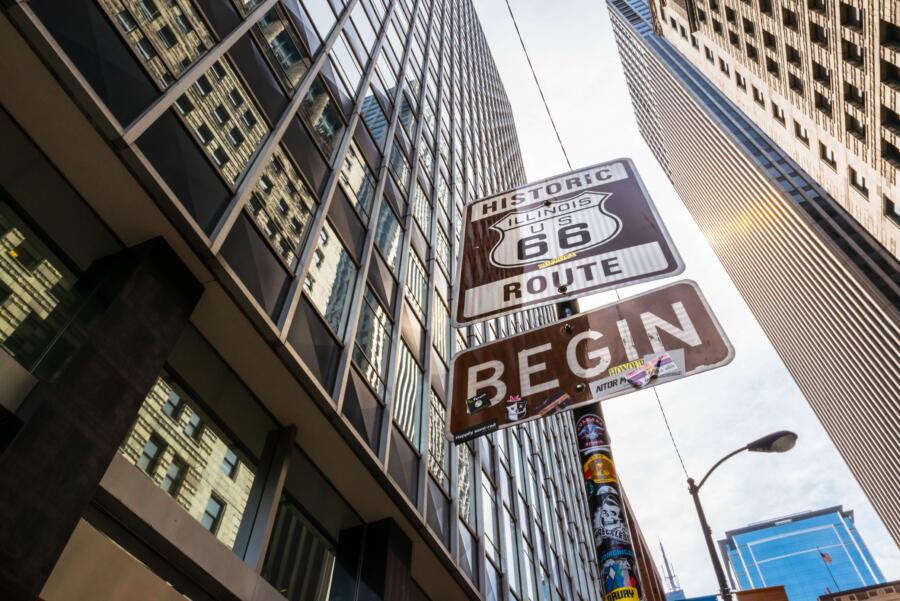
The original Route 66 began downtown at Jackson Boulevard and Michigan Avenue, a central location chosen for its connection to the city’s early road network. From there, the highway wound southwest through neighborhoods, industrial corridors, and small towns that would soon become iconic stops on the Mother Road.
The heyday of the Mother Road
The golden era of Route 66 stretched from the 1930s through the 1950s.
During the Dust Bowl, thousands of families used the road to flee westward in search of opportunity. More than half a million people left the southern Great Plains states during the 1930s, with most heading to California.
The Grapes of Wrath, John Steinbeck’s famous 1939 novel, followed the Joad family as they traveled west along Route 66. Just one year later, the story was adapted into a major Hollywood film starring Henry Fonda, cementing Route 66’s place in American cultural memory.
After World War II, booming car culture transformed the highway into a symbol of freedom and adventure. In the 1950s, Route 66 became a staple for vacationers headed to California and road trippers looking for adventure.

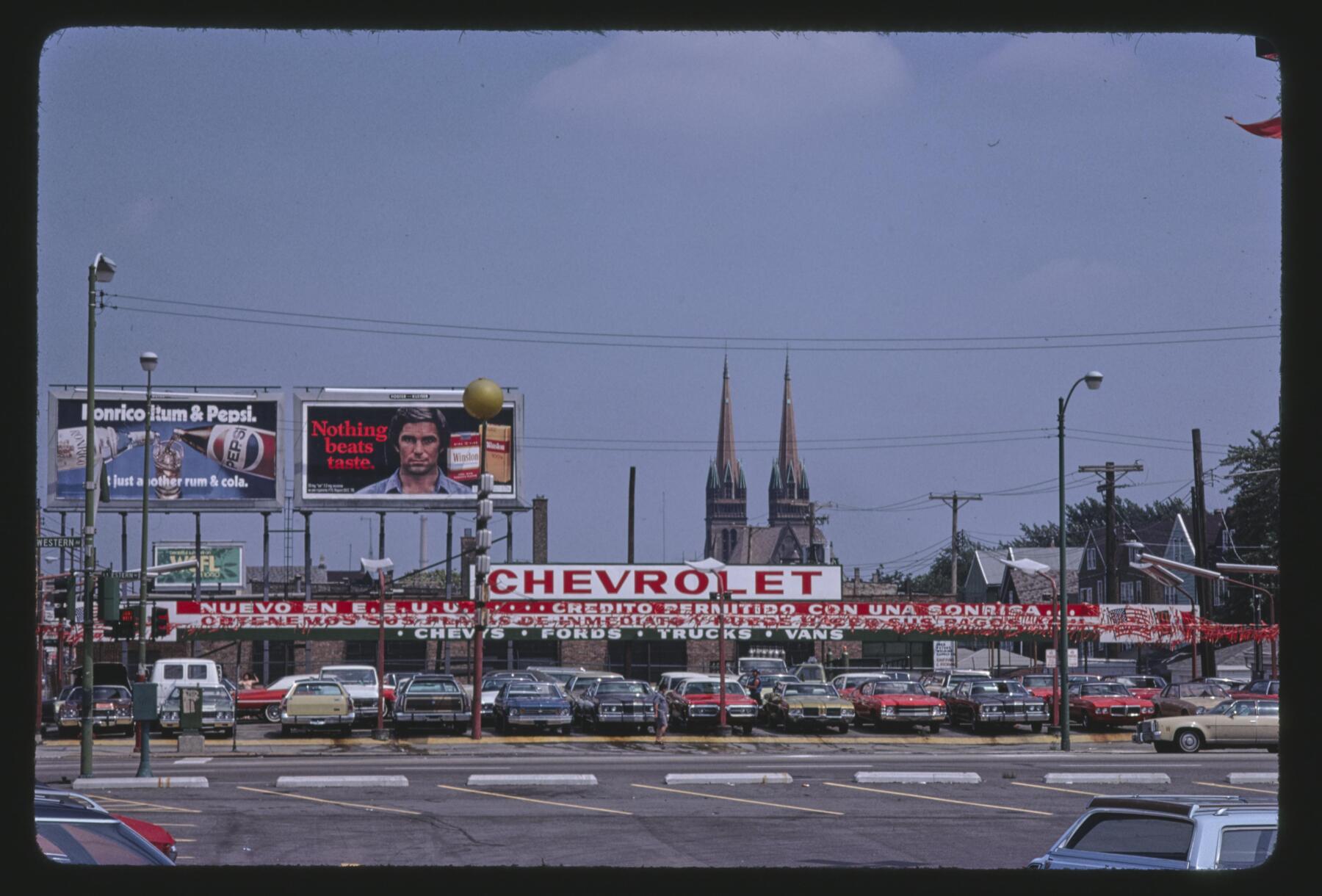
Soon, the route boomed with mom-and-pop establishments, including diners, gas stations, and motels to service the boom in travelers. The many sights and roadside attractions along the route became an important part of the tourism experience as people headed west.
Explore more: Fuel up for your journey with our guide on where to eat on Route 66 in Chicago.
The Mother Road continued to loom large in pop culture, including a starring role in Route 66, a major TV series that ran from 1960 to 1964. Films like Easy Rider and Thelma & Louise used Route 66 to convey themes of escape and transformation. And the road was forever immortalized by the song “(Get Your Kicks on) Route 66”, first recorded by The King Cole Trio.
By the 1970s, the rise of the Interstate Highway System made Route 66 increasingly obsolete, and in 1985 it was officially decommissioned. Many towns along the route declined as traffic shifted to faster, straighter freeways.
Yet nostalgia, preservation efforts, and a renewed fascination with Americana have sparked a remarkable revival. Today, Route 66 enjoys a second life as a heritage corridor celebrated by travelers, historians, and communities who have restored vintage landmarks and embraced the road’s mythic status in American culture.
Route 66 and the Green Book
During Route 66’s heyday, Black Americans traversing the route often had a vastly different experience than white travelers.
Across the eight states the highway traversed, segregation shaped every aspect of travel. Many gas stations, motels, cafés, and rest stops refused service to Black motorists, forcing them to plan trips with caution.
During this time, Black travelers relied on the Negro Motorist Green Book. Published from 1936 to 1964, this guide listed hotels, restaurants, service stations, and more across the country that would serve Black customers. Green Book locations on Route 66 were an essential lifeline for Black motorists in this era.
The Green Book boosted Black‑owned businesses along Route 66 and provided crucial information for safe passage. Green Book sites near Route 66 in Chicago still standing today include:
- Navy Pier
- Art Institute of Chicago
- Field Museum
- Adler Planetarium
- Shedd Aquarium
- Chicago Cultural Center
- Soldier Field
- Hilton Chicago
The guide also included many other Chicago locations, including a variety of sites throughout the city’s historic Bronzeville neighborhood.
Chicago’s original Route 66 alignment
Route 66 was officially commissioned in 1926, the same year Chicago was booming with new skyscrapers, jazz clubs, and industries like steel and meatpacking.
From its historic downtown starting point, Route 66 followed a path that many Chicagoans still recognize today:
- Jackson Boulevard and Michigan Avenue heading westbound
- Ogden Avenue through the Near West Side
- Southwest along Ogden toward Cicero and Berwyn
- Continuing through suburban towns like Lyons, McCook, and Joliet
This alignment connected travelers to the city’s industrial might, immigrant neighborhoods, and bustling commercial districts, offering a first taste of the cultural diversity that defines the entire route.
The Navy Pier centennial starting point
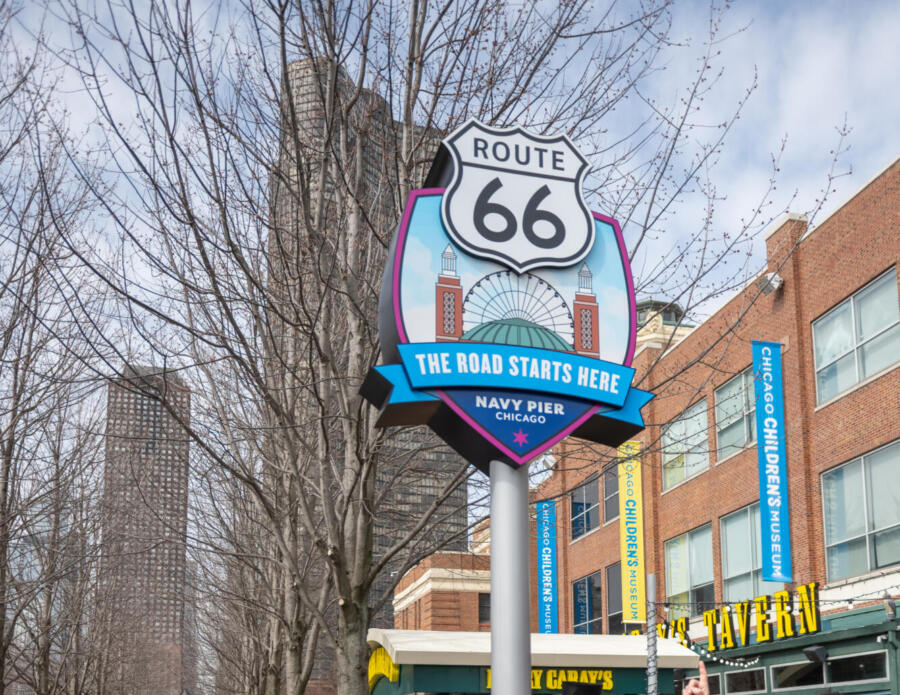
In 2026, Chicago officially recognized Navy Pier as the centennial starting point of Route 66. The designation is meant to celebrate the 100th anniversary of the route, symbolizing how Route 66 continues to evolve while honoring its roots.
For visitors, starting at Navy Pier offers a spectacular sense of arrival: the glittering lake, the skyline rising behind you, and the promise of 2,448 miles of Americana stretching ahead.
This spring and summer, Navy Pier will host a full slate of Route 66 centennial celebrations, including classic car displays, family-friendly festivals, and live performances. Visitors can find the complete schedule on Navy Pier’s official events calendar.
Iconic Route 66 stops in Chicago
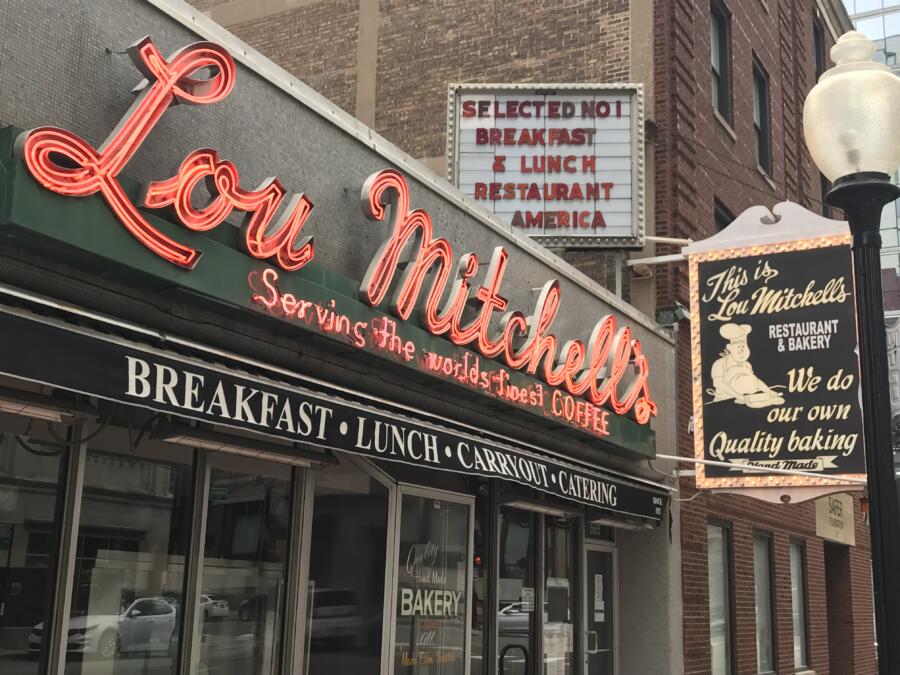
Chicago’s stretch of Route 66 brims with landmarks that blend history, architecture, and pure nostalgia. Here are some must‑see stops for visitors beginning their journey — and make sure to check out our full Route 66 Chicago itinerary for more ideas.
1. Navy Pier centennial starting point
Chicago’s lakefront gem is a lively, family‑friendly destination with restaurants, rides, and public art. Snap a photo with the brand new Route 66 sign at Navy Pier before setting off on your journey.
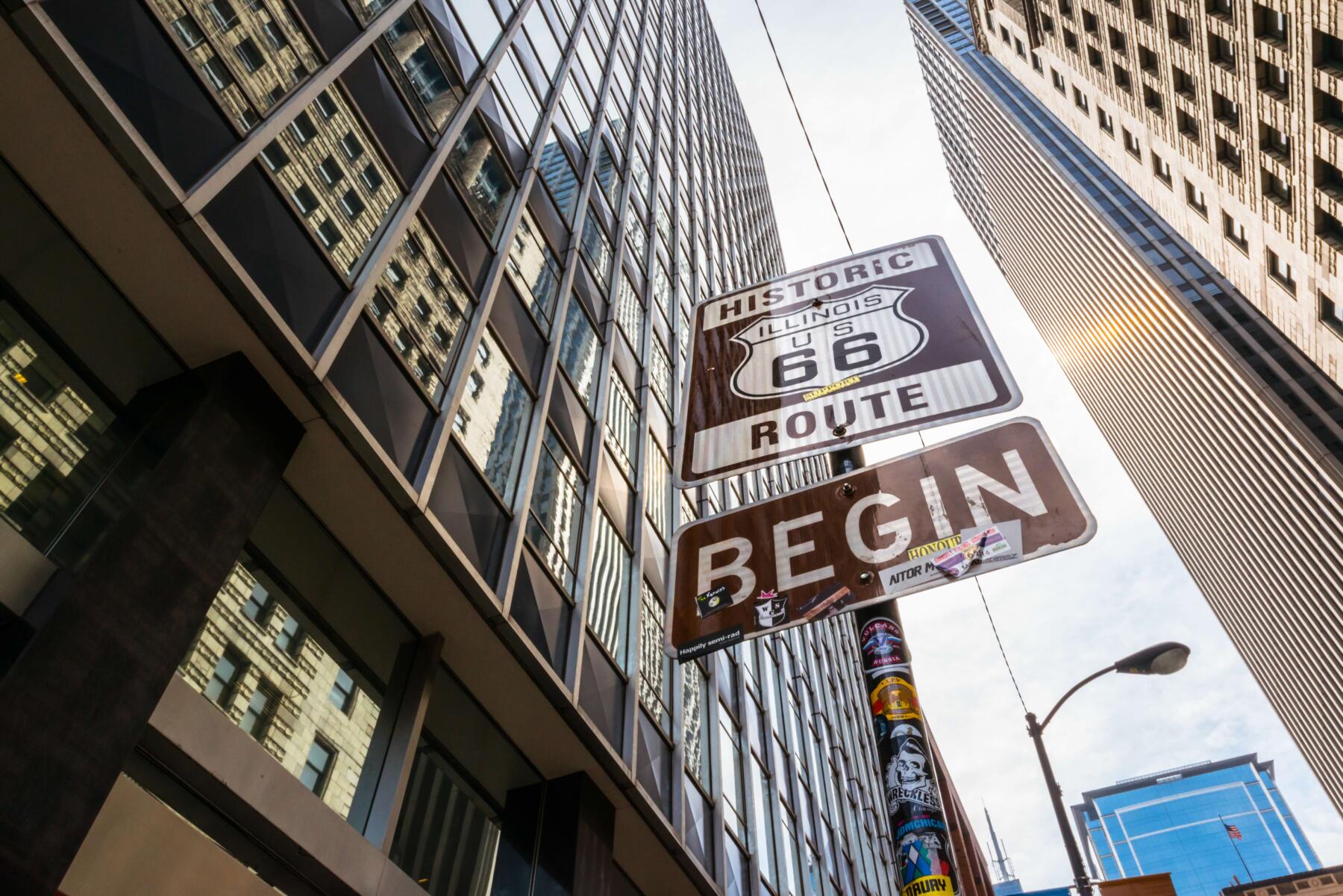
2. Historic Route 66 Begin sign
This classic sign at the intersection of Jackson and Michigan remains a pilgrimage spot for travelers and photographers. It’s a reminder of the road’s original alignment and a symbol of Chicago’s role in American road‑trip culture.
3. Lou Mitchell’s
A Chicago institution since 1923, Lou Mitchell’s has long been known as the “first stop on the Mother Road.” The pancakes, donut holes, omelets, and “world’s best coffee” have fueled countless Route 66 adventures.
4. The Berghoff restaurant
One of Chicago’s oldest restaurants, The Berghoff has been serving German classics since 1898. Chicago’s first post-Prohibition liquor license proudly hangs behind the bar. Stop in for a pint and a pretzel, then snap a photo with the iconic neon marquee out front.
5. Route 66 mural
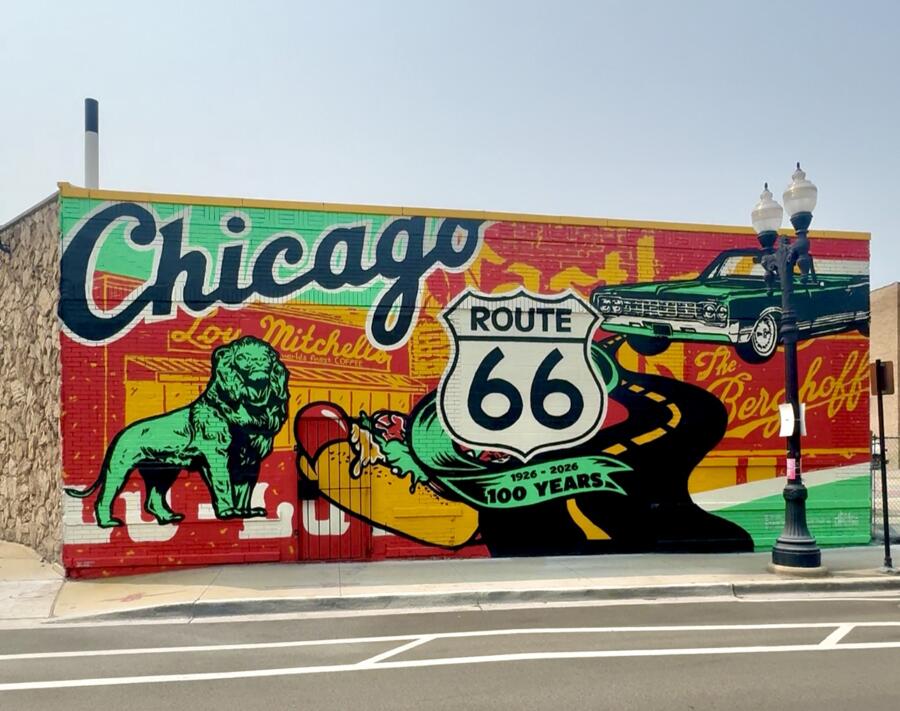
As you begin your Route 66 journey, make sure to pull over at Lulu’s Hot Dogs. This retro spot sports a large-scale Route 66 mural that depicts some of the iconic spots on this list.
As Route 66 celebrates its 100th anniversary, Chicago remains the place where the adventure begins. No matter how far you’re planning to travel, you’re stepping into a century‑long tradition of exploration, freedom, and discovery.