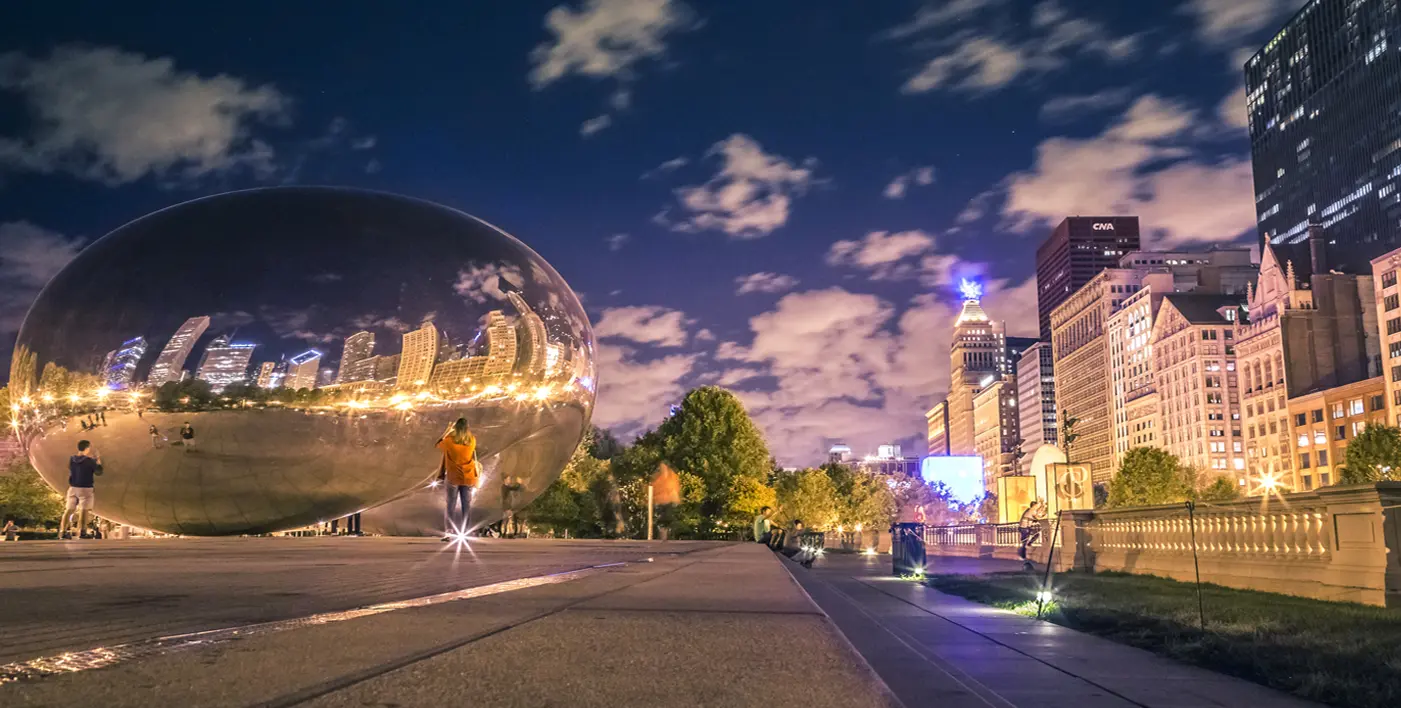
Route 66 may begin in iconic downtown Chicago, but there’s so much more to explore along the route.
Chicago neighborhoods along Route 66
The legendary highway starts on Michigan Avenue, just outside the Art Institute of Chicago, before cutting through some of the city’s most historic neighborhoods, including North Lawndale, Greektown, and Little Village.
Along the way, you’ll discover unique local sights, under-the-radar Chicago history, and some of the city’s best restaurants.
Little Village

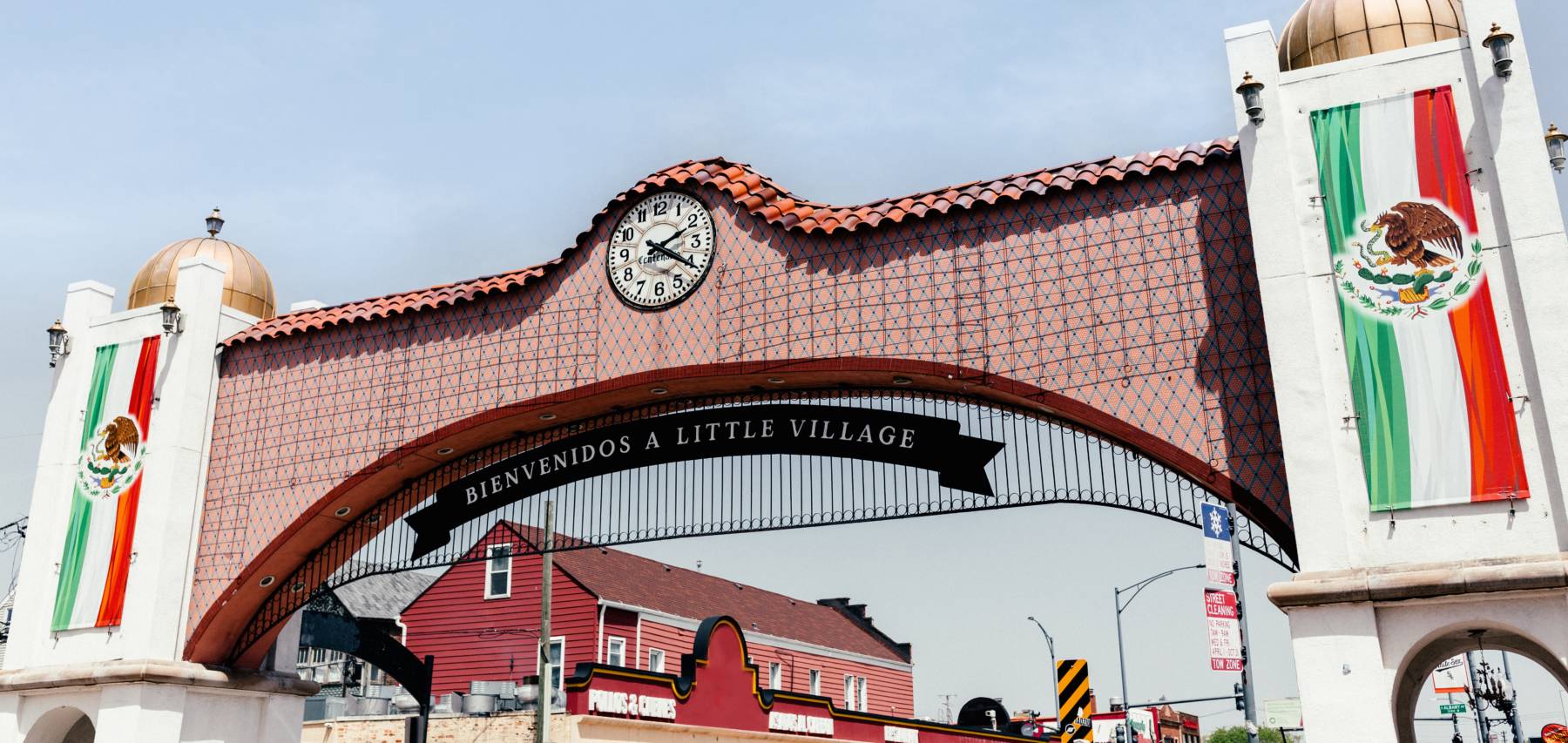
A short detour south will deposit you in Little Village, known as the “Mexico of the Midwest.” This thriving Hispanic community is home to the city’s second-highest-grossing retail district: the bustling 26th Street corridor, lined with colorful shops, authentic restaurants, street vendors, and more.
History of Little Village
The area that would become known as Little Village was first settled by Czech and Polish immigrants after the Great Chicago Fire of 1871. Many of these early residents worked in nearby factories, including Hawthorne Works.
Once considered a hallmark of American manufacturing, Hawthorne Works began as a few dozen buildings in the early 1900s in nearby Cicero and quickly grew into one of Chicago’s largest industrial employers.
During World War II, Hawthorne produced flight trainers, submarine detectors, mine fuses, and radios for planes, tanks, and artillery — the nearby Route 66 served as a valuable path to transport wartime equipment.
Today, you can visit the Hawthorne Works Museum and see the last remaining water tower structure.
In the 1960s, the community saw a huge influx of Mexican and Mexican American residents — reinvigorating the area’s commercial district and shaping “La Villita” into the vibrant cultural corridor it is today.
Things to do and see in Little Village
- The terra cotta arch over 26th Street welcomes visitors to the community and honors the influence of Mexican American culture in the neighborhood and the city.
- Walk the 26th Street corridor, known as the “Mexican Magnificent Mile,” lined with hundreds of businesses, restaurants, and colorful murals.
- Stop into Artesanías Elena for souvenirs, Dulcelandia to stock up on sweets for your road trip, and OPEN Center for the Arts to check out the works of local artists.
Greektown
As you begin your drive away from downtown Chicago, the first neighborhood you’ll hit is Chicago’s historic Greektown enclave. Located on the city’s Near West Side, Greektown is known for its wealth of authentic dining options.
History of Greektown
The first Greeks arrived in Chicago in the 1840s. Many of these early immigrants started out asfood peddlers before becoming restaurant owners — the beginning of a rich culinary tradition that can still be found throughout Greektown today.
Originally known as the “Greek delta,” this enclave on the near West Side was at one point home to thousands of Greek residents, along with Greek-owned businesses, restaurants, and churches.
In 1949, construction of the Eisenhower Expressway, followed by the UIC campus, displaced many Greektown residents and businesses. Some dispersed to other areas of the city (like Lincoln Square) and suburbs, while many moved a few blocks north.
Today, much of Chicago’s Greektown neighborhood is concentrated around Halsted from Monroe to Van Buren — where Greek culture and history still loom large.
Things to do and see in Greektown
- The National Hellenic Museum is the cultural heart of the Greektown neighborhood, with more than 10,000 artifacts dedicated to Greek history, art, and culture.
- Established in 1922, the Athenian Candle Company is a fourth-generation, family-owned Greektown business. Explore the colorful array of hand-dipped tapered candles used in celebrations and ceremonies in many Greek and Orthodox households.
- One of the neighborhood’s oldest surviving traditional Greek restaurants, Greek Islands opened in 1971 and is still one of the neighborhood’s most popular establishments.
North Lawndale
The North Lawndale neighborhood is home to a rich history, both as a center for Jewish culture and a pivotal location in the national civil rights movement.
In honor of the Route 66 centennial, the Central Park Pink Line station will transform into the Lawndale Route 66 Visitor Information Station. The space will celebrate Lawndale’s connection to Route 66 with a retro diner-inspired experience, featuring a gift shop and visitor resources, beginning Nov. 4, 2026.
History of North Lawndale
In the 1950s and ’60s, Ogden Avenue in North Lawndale was one of Chicago’s busiest automobile rows, directly influenced by its proximity to Route 66.
A landmark of this era, the Castle Car Wash at 3801 W. Ogden Ave. operated during the highway’s heyday and has become a recognizable sight on Route 66.
The early residents of North Lawndale were Russian and European immigrants, eventually making the area the epicenter of Jewish culture in Chicago. In the Route 66 heyday, the area was filled with synagogues and Jewish social organizations.

In the 1960s, North Lawndale witnessed a significant shift as traffic was diverted away from Route 66 to the new Interstate 55. More African American residents moved into the neighborhood, bringing attention to discriminatory housing practices.
In 1966, Dr. Martin Luther King Jr. and his family moved into an apartment in North Lawndale in 1966, making the area the center of his civil rights movement in the North.
Things to see in North Lawndale
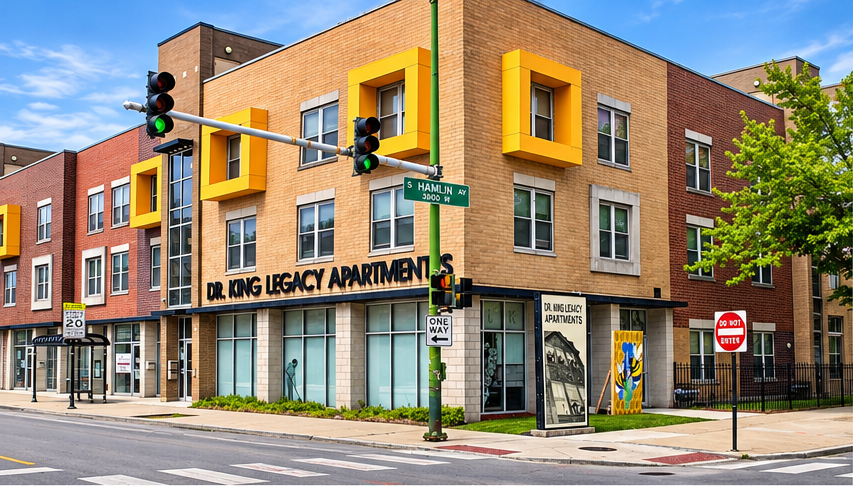
- Located where Dr. King once lived, Dr. King Legacy Apartments at 1550 S. Hamlin Ave. houses the Martin Luther King Fair Housing Museum on the main floor.
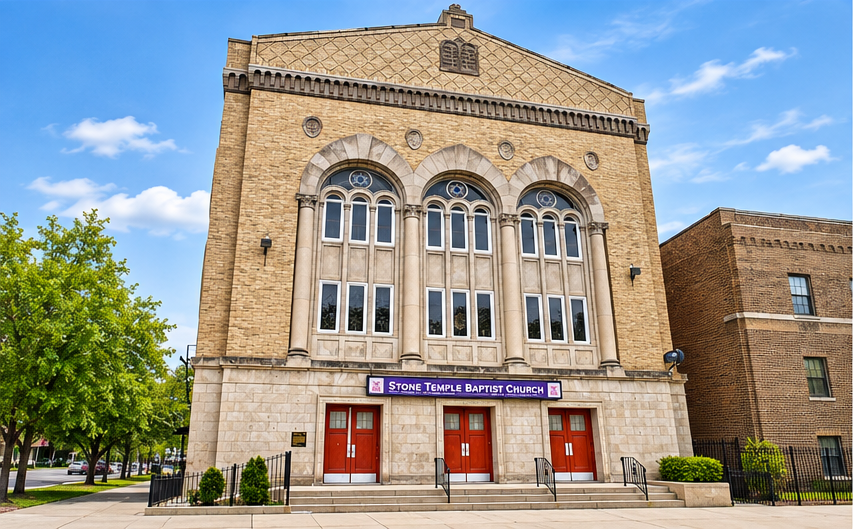
- Listed on the National Register of Historic Places, the Stone Temple Baptist Church at 3622 W. Douglas Blvd. was where Dr. King preached when he lived in the area.
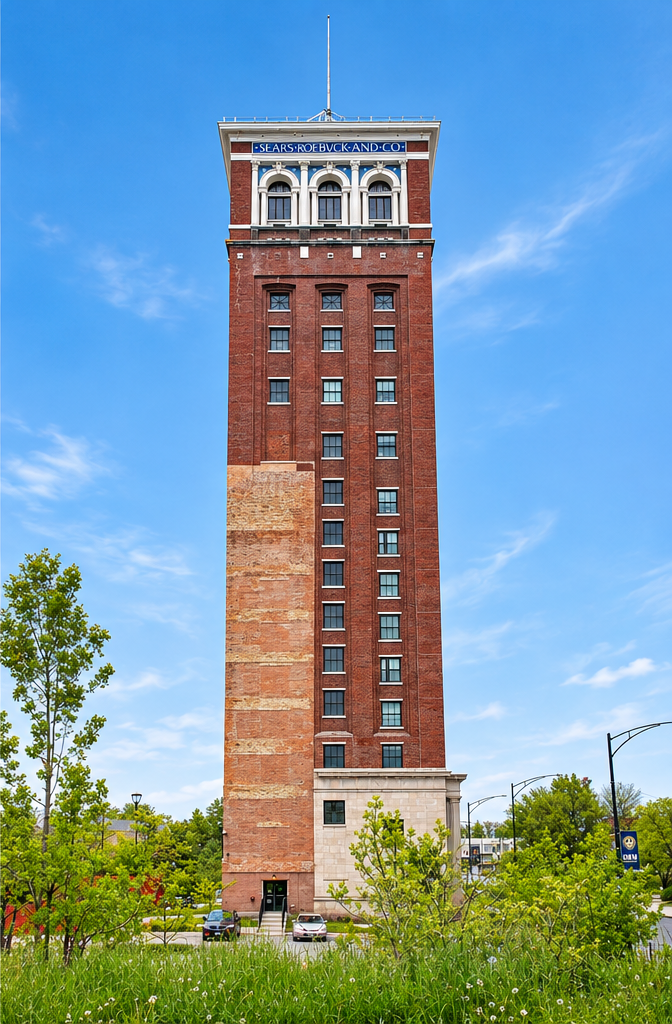
- North Lawndale’s “original Sears Tower”, which served as the retail giant’s global headquarters from 1906 until 1973, is now a city landmark district.
Explore more: Discover more things to do and see along Route 66 in Chicago.